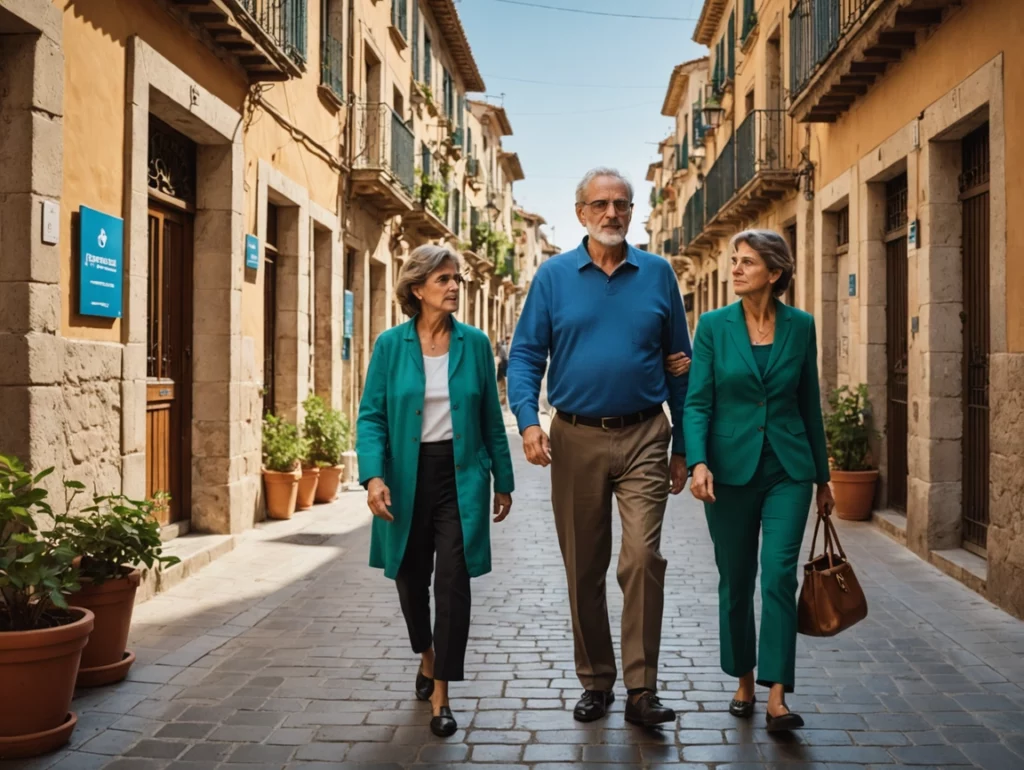
A complete guide to making the most of this option under Spanish legislation
Introduction to Active Retirement for the Self-Employed
Active retirement (jubilación activa) is an arrangement that allows self-employed workers to combine receiving part of their retirement pension with carrying on a self-employed economic activity, under the conditions and requirements laid down by current Spanish legislation. It has become a highly valued option for self-employed professionals who want to continue working after reaching retirement age without losing their status as pensioners.
The appeal of active retirement lies in its ability to offer a way to extend working life, support financial continuity and make use of professional experience, while also helping to sustain the Social Security system. However, using it correctly requires detailed knowledge of the regulations, especially regarding the amount of the pension that can be combined with work and the contribution obligations.
In this article, we cover in detail every aspect of active retirement for the self-employed, from its definition and legal framework to the procedures for applying for it, its advantages, obligations and practical cases that illustrate how it applies to the working reality of self-employed workers in Spain.
Concept and Legal Framework of Active Retirement
Definition of active retirement
Active retirement is an arrangement that allows self-employed workers who have reached the ordinary statutory retirement age to combine receiving their pension with carrying on a self-employed professional activity, provided that the legal requirements are met.
It is important to note that, within the Special Scheme for Self-Employed Workers (RETA), active retirement allows working life to be extended while receiving the retirement pension, with certain limits on its amount, thus allowing a more flexible transition.
Applicable regulations and current rules
The main regulation on active retirement for the self-employed in Spain is found in Royal Legislative Decree 8/2015 of 30 October, approving the consolidated text of the General Social Security Law (TRLGSS), specifically in Article 214. The regulation has also been amended and developed by later legislation, such as Law 6/2017 on Urgent Reforms of Self-Employment and Royal Decree-Law 13/2022.
Social Security regulations set the compatibility percentages, contributions and obligations of self-employed workers in active retirement, ensuring the financial balance of the benefits.
Legal requirements for active retirement
To access active retirement under the self-employed scheme, current legislation sets out a series of requirements that must all be met, including:
Having reached the ordinary statutory retirement age (without applying the early retirement reduction coefficients).
Having been awarded and being entitled to 100% of the regulatory base of the corresponding retirement pension.
Being registered with RETA and continuing the professional activity.
Not having taken early retirement or partial retirement.
Requirements for Active Retirement for the Self-Employed
Minimum age and contribution conditions
The minimum age for active retirement is the same as for ordinary retirement (which is being raised gradually until 2027, depending on the years of contributions).
As for contribution conditions, the self-employed worker must have contributed for long enough to be entitled to 100% of the regulatory base of their pension.
Employment situation and economic activity
Self-employed workers in active retirement must remain registered with RETA and continue their usual economic activity or a different one, provided that this activity is compatible with receiving the retirement pension. The regulations require the activity carried out to be professional and properly declared.
It is important to note that the activity can be carried out in any form of self-employment. Unlike other compatibility arrangements, Active Retirement does NOT impose limits on the income derived from the self-employed worker's economic activity.
Amount of the Pension (Compatibility)
The main condition of Active Retirement is the limit on the amount of the pension received:
General rule (no employees): The self-employed worker will receive 50% of the retirement pension to which they are entitled.
Exception (with employees): The self-employed worker will receive 100% of the retirement pension, provided that they can show they employ at least one employee and maintain this condition throughout the period of Active Retirement.
Procedure for Applying for Active Retirement
Documentation required
To apply for active retirement, self-employed workers must submit the following documents to Social Security:
Formal application for active retirement, completed on the official forms.
Identity document (DNI, NIE, passport).
Document proving registration with RETA and, where applicable, documentation proving the employment of the employee (to receive 100% of the pension).
Employment history report (informe de vida laboral) issued by Social Security.
Proof of age and of meeting the contribution requirements.
Steps for applying to Social Security
The process for applying for active retirement follows these steps:
Preparing the documentation: Gather all the required documentation and check that it is valid.
Submitting the application: This can be done online through the Social Security Electronic Office, or in person at the relevant offices.
Assessment and decision: The Administration will review the application, check that the requirements are met and issue a decision.
Notification of the decision: The applicant will be notified and the pension will be paid according to the authorised compatible percentage (50% or 100%).
Time limits and administrative procedures
The maximum time limit for deciding and notifying the decision is 90 days (3 months) from the date the application is submitted. If there is no response within that time, the application will be deemed to have been rejected.
Advantages and Benefits of Active Retirement
Combining income and pension
One of the main benefits of active retirement is the possibility of continuing your professional activity while receiving a significant part of your retirement pension (50%, or 100% if you have employees). This makes it possible to maintain a decent standard of living and extend your working life.
Encouraging continuity of work and income
Active retirement encourages people to stay in the labour market, promoting the transfer of knowledge and experience. It also benefits household finances and contributes to the sustainability of the pension system.
Impact on the retirement pension
Active retirement does not change the final amount of the pension already awarded, since contributions for retirement cease. However, by allowing professional activity to continue, it supports the self-employed worker's financial stability.
Obligations and Limitations for Self-Employed Workers in Active Retirement
Tax and contribution obligations
Self-employed workers in active retirement must continue to meet the tax obligations (VAT, personal income tax) arising from their economic activity. As for Social Security, they must pay contributions, although at a reduced level:
Contributions for Temporary Incapacity (IT).
Contributions for occupational contingencies.
A special solidarity contribution (currently 9% of the contribution base, which excludes contributions for retirement, as the person is already a pensioner).
Limitations on professional activity
Although they can continue their activity, self-employed workers in active retirement must respect the authorised amount of the pension (50% or 100%). The activity must be compatible with receiving the pension, and any change in their employment situation must be reported to Social Security (especially if they hire or dismiss the employee who gives entitlement to 100%).
Consequences for the benefit and the pension
Failure to meet the requirements, such as not keeping the employee when receiving 100% of the pension, or not paying the required contributions, can lead to the loss or suspension of the retirement pension, or the obligation to repay amounts received unduly.
Practical Cases and Examples of Active Retirement
Example 1: A self-employed worker who continues working after retirement
Juan, aged 67, has opted for active retirement. He has no employees. He continues his consultancy business and earns income from it. As a result, he receives 50% of his pension and supplements his income with his work.
Example 2: A self-employed worker who employs someone
María, aged 66, works as a self-employed graphic designer and employs a full-time assistant. She meets the requirements and has applied for active retirement. As she has at least one employee, she benefits from compatibility and keeps her retirement pension in full (100%), in addition to her professional income.
Tips for efficient management
Get advice from Social Security and tax experts.
Assess whether it is worth hiring an employee to receive 100% of the pension.
Keep documentation and returns up to date.
Monitor income to stay in line with tax planning.
Tax and Accounting Aspects of Active Retirement
Implications for the income tax return
Income from the retirement pension and income from the professional activity must be declared for personal income tax. Pension income is treated as employment income and income from the activity as business income, applying the corresponding deductions.
Treatment of income and expenses
All income and expenses related to the professional activity must be carefully recorded, clearly distinguishing deductible expenses, in order to comply with tax regulations and optimise the tax burden.
Tax planning recommendations
Consult specialist tax advisers.
Take advantage of the applicable deductions and tax relief.
Plan how income is combined to maximise the benefits without incurring penalties.
Impact on Social Security and on the Self-Employed Worker's Finances
Effects on contributions and future benefits
Active retirement involves continuing to pay solidarity and occupational contingency contributions, which keeps the self-employed worker covered for temporary incapacity, but does not allow further retirement entitlements to be built up.
Financial consequences of active retirement
For self-employed workers, active retirement is an opportunity to continue their economic activity and earn additional income, improving their financial stability and contributing to the local economy.
Conclusions and Final Recommendations
Summary of key advantages and requirements
Active retirement under the self-employed scheme offers many benefits, such as combining income and extending working life, provided that the requirements of ordinary retirement age and contributions for 100% of the base are met, and that you accept receiving 50% of the pension (or 100% if you employ someone).
Tips for an effective transition
Get advice from professionals specialising in Social Security and taxation.
Plan whether hiring an employee is worth it to obtain 100% of the pension.
Review the regulations periodically to adapt to possible legislative changes.
LEGAL DISCLAIMER
Important: The information in this article is for general information purposes only and is based on current Spanish regulations, in particular Article 214 of the TRLGSS. This information does not constitute or replace formal, binding legal advice. For an accurate assessment and to make decisions about your specific case, with its particular variables of age, contributions and employment, consult the specialist professionals at Menfisgrup or the National Social Security Institute (INSS).